
Sunlight as a Structural Guarantee: What Montana knew in 1972 that will help us now

In the American West, government transparency isn’t just good ethics. It is our primary protection against the Copper Kings of the late 1800s.
Montana’s 1972 Constitution, specifically the “Right to Know” (Article II, Section 9) and the “Right to Participate” (Article II, Section 8), was a direct response to a century of corporate influence.
Our 1972 constitution wasn’t a light revision of the 1889 original. The convention was made up almost entirely of ordinary citizens, teachers, ranchers, farmers, and ministers. They met in Helena for 54 days and rewrote the state’s founding document from scratch.
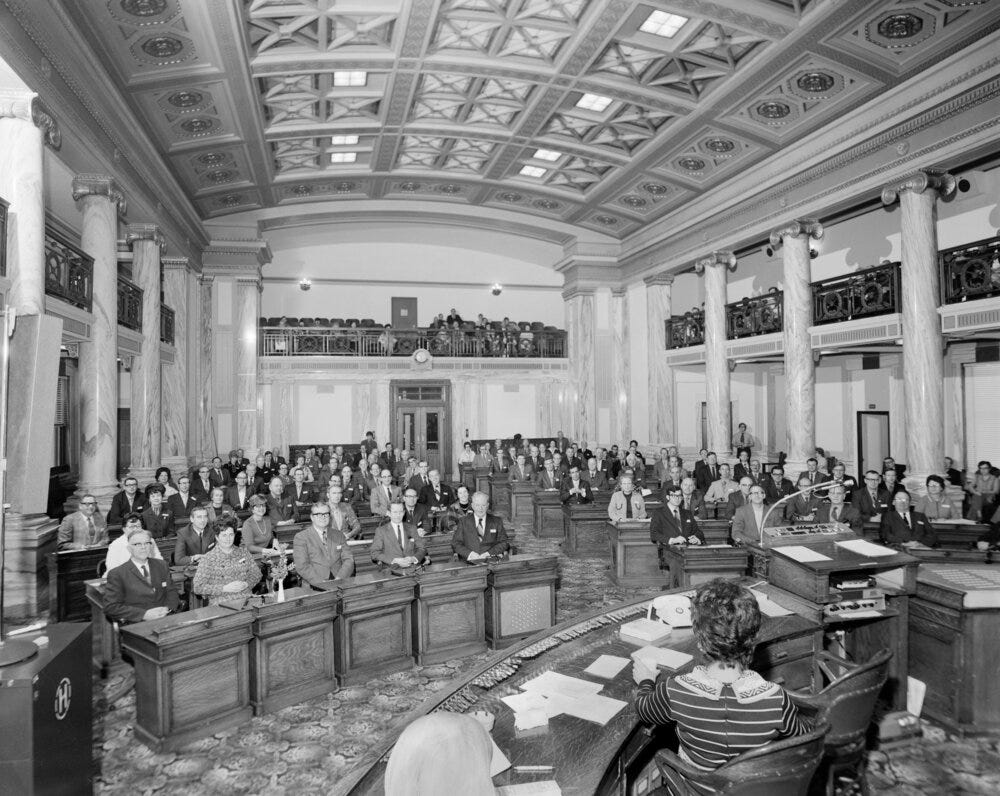
They did this in the long shadow of the Anaconda Copper Mining Company, which hadn’t just dominated Montana’s economy. It owned most of the state’s newspapers and exercised outsized control over its legislature and courts. In the early 2000s, my 99-year old neighbor Dorothy, born and raised in Butte, refused to subscribe to the newspapers because of their history of being corporate shills.
Generations of Montanans lived what Dorothy had: concentrated capital operating in the dark, because public visibility was the one thing that could stop it.
Federal websites make this an urgent issue. Researchers have documented roughly 8,000 pages and over 3,000 datasets removed or altered since early 2025, covering everything from maternal mortality statistics to food security data. The National Park Service staff were directed to edit or remove interpretive signage at sites across at least 17 parks, including here in Montana.
Dennis Kelleher of Better Markets describes this phenomenon as “the industry termites” eating away at institutions from the inside.
When public data vanishes, we feel the impact immediately on the ground. The raw reality in Montana is that we are losing the ability to see information about what hits us hardest, our utility rates, our public lands, altered by people we will never see, for reasons nobody is forced to explain.
Montana’s 1972 delegates took this corporate secrecy head on, and built two constitutional firewalls into our Declaration of Rights:
The Right to Know (Article II, Section 9): Guarantees the public the absolute right to examine the documents and observe the deliberations of all public bodies, unless an individual’s privacy interest clearly outweighs the merits of public disclosure.
The Right to Participate (Article II, Section 8): Requires public agencies to give citizens a reasonable opportunity to weigh in before final decisions are made.
Both provisions are unusually strong compared to what most other states have on the books. Helena pastor George Harper, Glendive historian Louise Cross, and League of Women Voters leader Dorothy Eck contributed to writing these protections into our Constitution. By elevating a citizen’s access to information into an inalienable right, Montana transformed regulatory oversight from a private negotiation among corporate titans into a public exercise in economic sovereignty.
There is a lesser-known provision from that same convention that proves this: Article XIII, Section 2, constitutionally establishes Montana’s Office of Consumer Counsel. Unlike most states, Montana has a standing, independent advocate whose sole job is representing ratepayer interests in front of the Public Service Commission (PSC):

To understand the friction happening in utility regulation today, we have to understand “The Company.” Anaconda Copper did not merely influence Montana; it controlled Montana.
In 1903 the corporation flexed, forcing a statewide corporate lockout designed to coerce the state legislature into changing the judicial system to favor mining interests.
That demonstration of total economic control was one of the key historical points that inspired our 1972 delegates. They intentionally established constitutional mandates for transparency and representation for regular people, ensuring utility regulation remained a public, rather than corporate, function.
But today, institutional echoes of the Copper King era are manifesting in today’s Crypto Kings and the AI gold rush.
In Docket No. 2026.04.023, NorthWestern Energy has proposed a “Large New Load Tariff“ to accommodate the immense energy requirements of data center developers across the state. NorthWestern is currently negotiating power-supply agreements that would, overnight, more than double the utility’s entire current load.
Much like the mining magnates of the early 20th century, modern tech infrastructure wants to shift the risk and the financial burden of expansion directly onto Montana families. In spite of our constitutional guarantees, the Public Service Commission has allowed the specific terms of these contracts to stay hidden from the ratepayers who are being asked to guarantee the risk. The constitutionally created Consumer Counsel and a coalition of groups represented by Earthjustice are fighting the secrecy. They are doing, in 2026, the job George Harper and Dorothy Eck built the office to do.
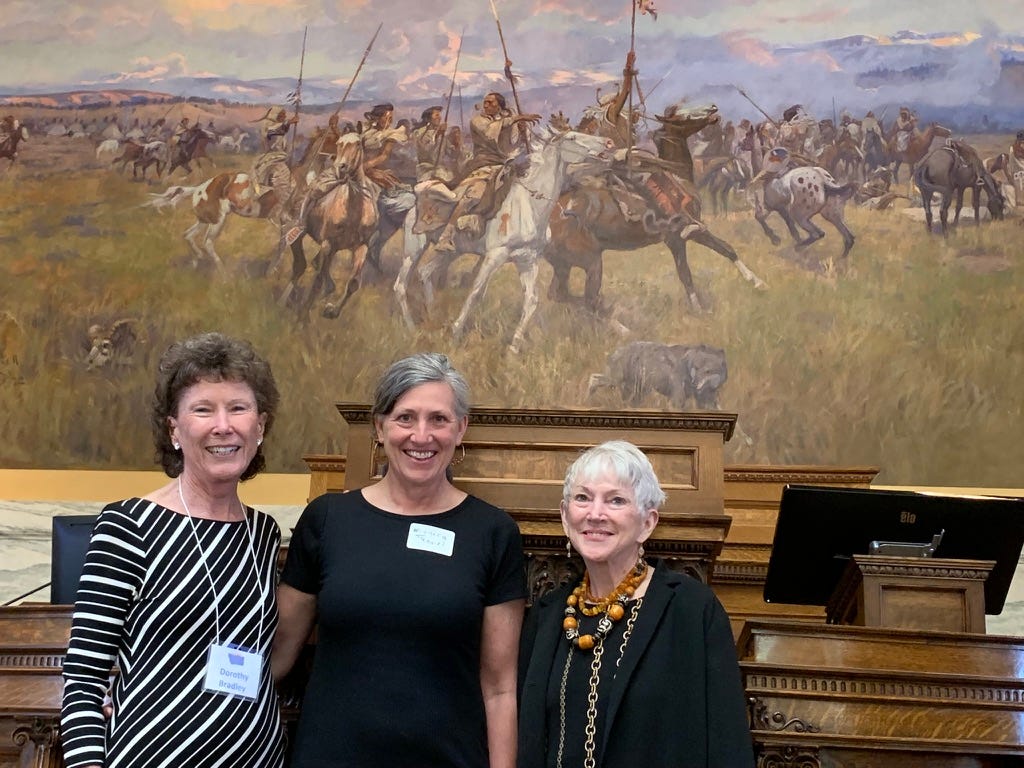
The 1972 delegates built a structural answer to the problem of corporate capture, and it is one of the strongest constitutional frameworks in the country.
As federal websites go dark and local utility contracts retreat behind administrative veils, the question is whether an architecture built to check the visible smokestacks of the Anaconda Company can hold the line against a very different, much less visible kind of concentrated capital.
The answer is up to We the People.
Here’s how to participate this week:
Track Docket No. 2026.04.023 at psc.mt.gov. No lawyer required. You can watch filings and sign up for notices yourself.
Show up to a public comment period. They work. Public pressure this spring helped push a Missoula-area data center applicant to withdraw its application.
Send this to one neighbor who thinks utility dockets are boring paperwork. They’re not. They’re where the 1972 Constitution is being tested, right now, in real time.
All together.
The current state and federal leadership is feeding off of voter apathy and ignorance. They would prefer that Americans ignore the Constitution, while always looking for somewhere to place the blame.They would prefer that we ignore the similarities between 1930's Europe and America, they are trying to change history and put themselves in a favorable light. They want us to be dumb, people.