
Fire and Ignorance

In 1988, fires burned through Yellowstone National Park. The immediate reaction was one of alarm. But time changed that. As Yellowstone’s fire management officer in 2018, John Cataldo said, “The ’88 fire was a reaffirmation that fire was what this landscape needed, and it was a great opportunity to get that message out.”
Getting the message out is no longer a priority.
Above average temperatures through the winter of 2025-2026 produced a spring with record-low snowpack across the high country.
This past winter was “off the charts warm” in Yellowstone, Jeff Henry, a 48-year Yellowstone winter season worker and author, told the Cowboy State Daily.
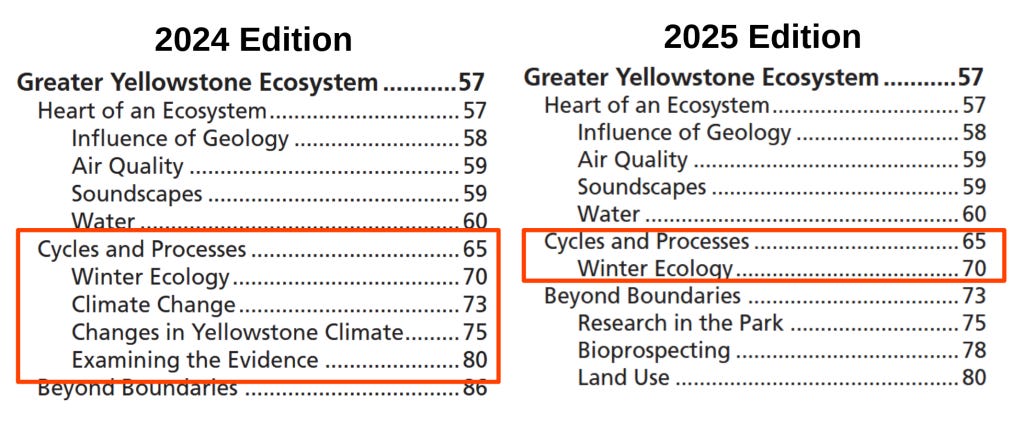
How is this Republican administration, backed by all four of Montana’s congressional delegation, dealing with this reality? The latest Yellowstone Resources and Issues Handbook, a National Park Service publication updated annually, does not mention climate change.
Learning from the fires of 1988, the Park Service began a systematic review of its fire management procedures. A new policy was approved in 1991 that set detailed limits on the prescription and containment of natural fires. Rather than burying the lessons of 1988, the NPS leaned into them, investing in decades of research into fire behavior, prescribed burning, fuel management, ecosystem recovery, and climate’s role in fire dynamics. That research infrastructure included labs, regional offices, and long-term monitoring stations that became the backbone of our understanding and management of increasingly intense and costly fire seasons.
But this administration is killing off what the fires of 1988 taught us.
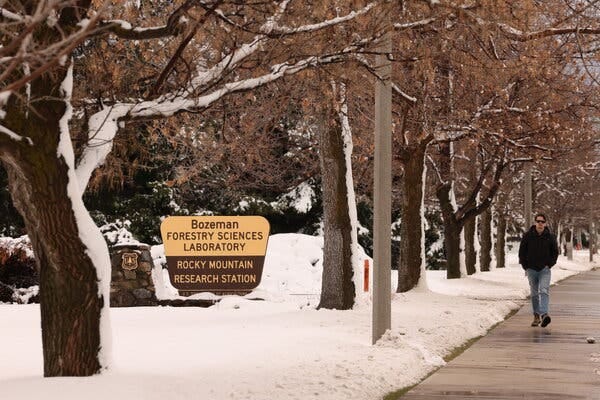
On March 31, 2026, the USDA announced one of the most sweeping reorganizations in the Forest Service’s 120-year history. The Forest Service will move its headquarters to Salt Lake City, Utah. The restructuring closes all nine regional offices, consolidates five research stations into a single hub in Fort Collins, Colorado, and closes 57 of 77 research facilities nationwide, including two sites in Montana.
The National Interagency Fire Center noted on April 1 that the number of fires in 2026 is 168% above the average. Within the first three months of 2026, wildfires burned more than 231% of the acreage compared to the 10-year average for the same period.
But the Republicans and DOGE have gutted our public agencies that can respond. In Montana, 17% of USDA employees have retired or resigned, with many of those who left being highly experienced employees near the end of their careers.
The administration claims that there will be no interruption to firefighting operations. But a government that has disrupted the people who know how to fight fire, and destroyed available resources, cannot promise no interruption, when interruption is its goal.
In 1988, the lesson was that fire management requires good science and public trust. 1988 prompted Washington to invest more in fire science to build the infrastructure needed to handle these ongoing issues.
The 2026 reorganization rejects that lesson, just as climate-driven fire seasons are becoming more severe and more expensive. The West is entering what may be a historically dangerous fire summer with an intentionally traumatized and structurally disrupted agency managing 193 million acres of forest and grassland.
Those are choices.
We the People can make different choices. Starting with who we put into the role of decision making.
All together.