
Broadview Pirates
Montana’s monopoly utilities are telling regulators one story and Wall Street another. American families pay for the difference.

I was a Broadview Pirate.
I played basketball for Broadview. I ran the 800 on this track and threw the javelin on this field:
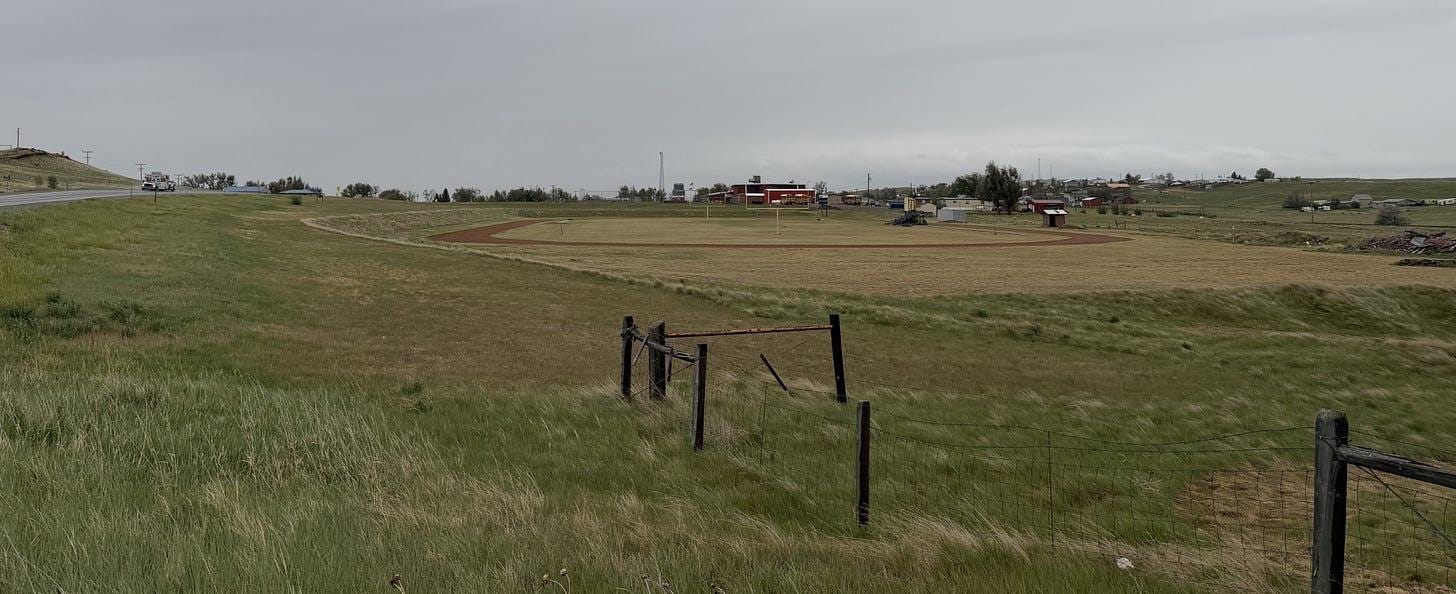
I had as many siblings as I did classmates.
But today, Broadview has a whole new level of pirates.
They don’t wear jerseys. They wear suits, sit in executive boardrooms, and they are eyeing our small Montana town for one of the largest corporate plunders in Montana’s history. (That is a high bar, but it looks like they will clear it.)
Right now, a data center developer called Quantica Infrastructure is proposing a 1,100 MW Big Sky Campus in Broadview. That is the proposed load, which is roughly equal to NorthWestern's entire current peak load for the entire state of Montana.
But the demand is just half the story. To supply it, Quantica filed interconnection applications for 7,235 MW of new capacity, including up to 1,785 MW of new gas generation. It took Montana 100 years to build our current grid, and these developers are looking to eclipse the state's entire current peak capacity overnight.
But the real piracy isn’t the scale. The real steal is how our monopoly utilities want Montana families to backstop the financial risk of building it. Our elected members of the Montana Public Service Commission can stop that.
NorthWestern Energy and Black Hills Corporation are asking the PSC to approve an $11.4 billion transaction (valued at over $15 billion). During the week-long hearing on the proposal, NorthWestern’s CEO Brian Bird testified under oath that the combined company’s five-year capital plan is about $3 billion. They call that the base case. It excludes the infrastructure needed to serve data centers. The utilities told the Commission, repeatedly, that data centers are “outside the scope” of the merger.
A few days before the hearing, Bird told Wall Street investors a completely different story. On NorthWestern’s Q1 2026 earnings call, Bird said that the “big news as of late” was NorthWestern advancing a Development Agreement with Quantica.
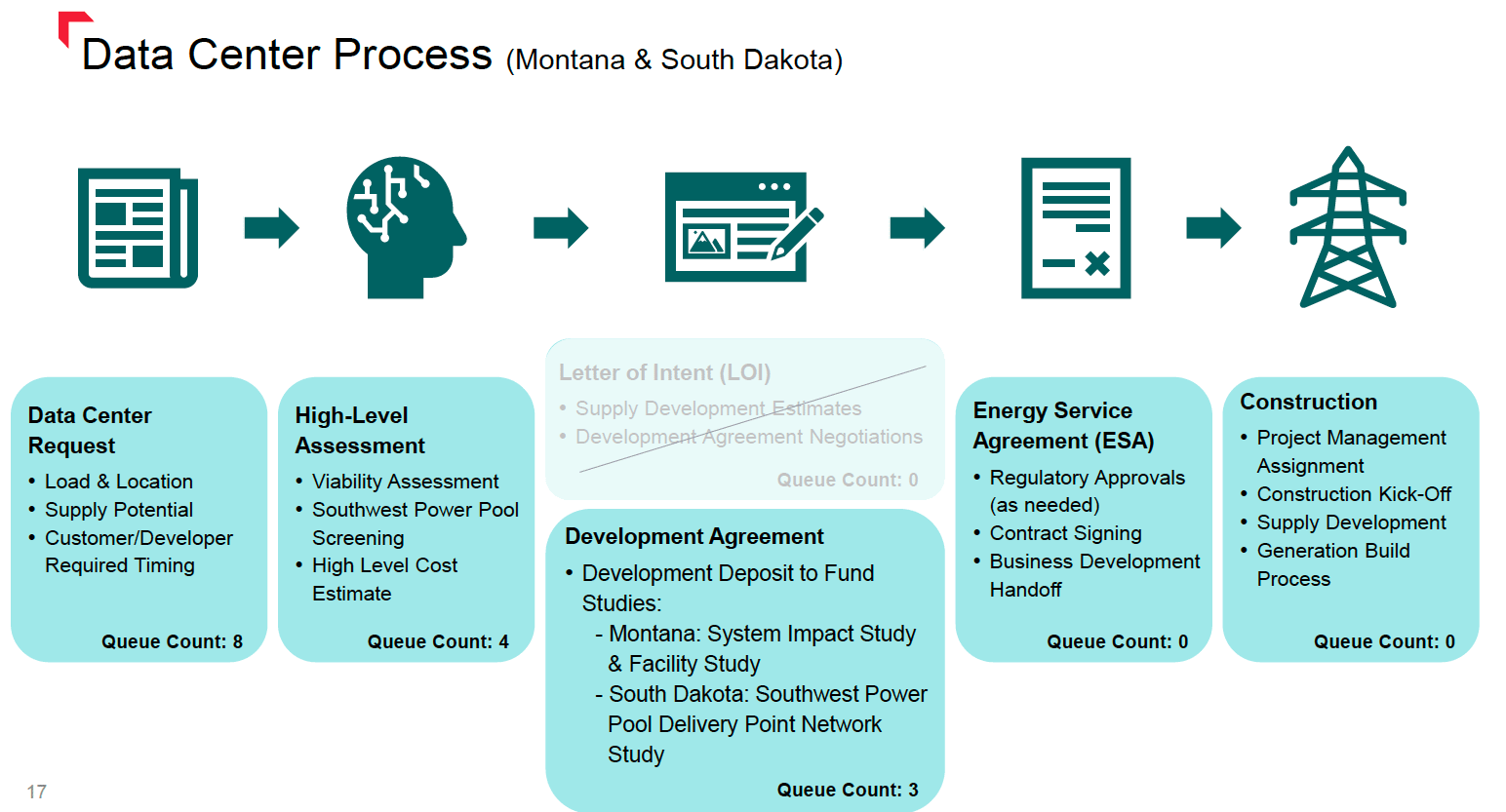
He also told investors (Blackrock and Vanguard being the two largest) that the merger provides the financial scale necessary to capture these gigawatt level tech loads.
Two audiences. Two stories. One set of captive ratepayers holding the risk.
The utilities have been much more specific in their planning than Mr. Bird let on at the hearing. NorthWestern acquired the Puget share of Colstrip (370 megawatts) for zero dollars. It is currently under a bridge contract with Mercuria through late 2027. Quantica’s load ramps beginning in early 2029. NorthWestern’s investor presentations describe the Puget Colstrip share as being held for “large load customers pending tariff approval.” That sequencing is not a coincidence. The Commission must examine it before acting on this transaction.
The Pirate’s booty is the stranded asset risk. The utilities promise that data centers will pay for upgrades to connect to the grid. But what if they don’t? Connecting that load requires grid and pipeline expansions that will cost billions of dollars.
If Quantica abandons the project for any reason, the trillion-dollar tech companies walk away. They bear no ongoing obligation. The grid upgrades, the pipeline expansions, the gas storage facilities, stay behind. Montana families, ranchers, small businesses like the Homestead Inn, and institutions like hospitals and the Broadview Public School, pay them off through monthly bills, for decades.
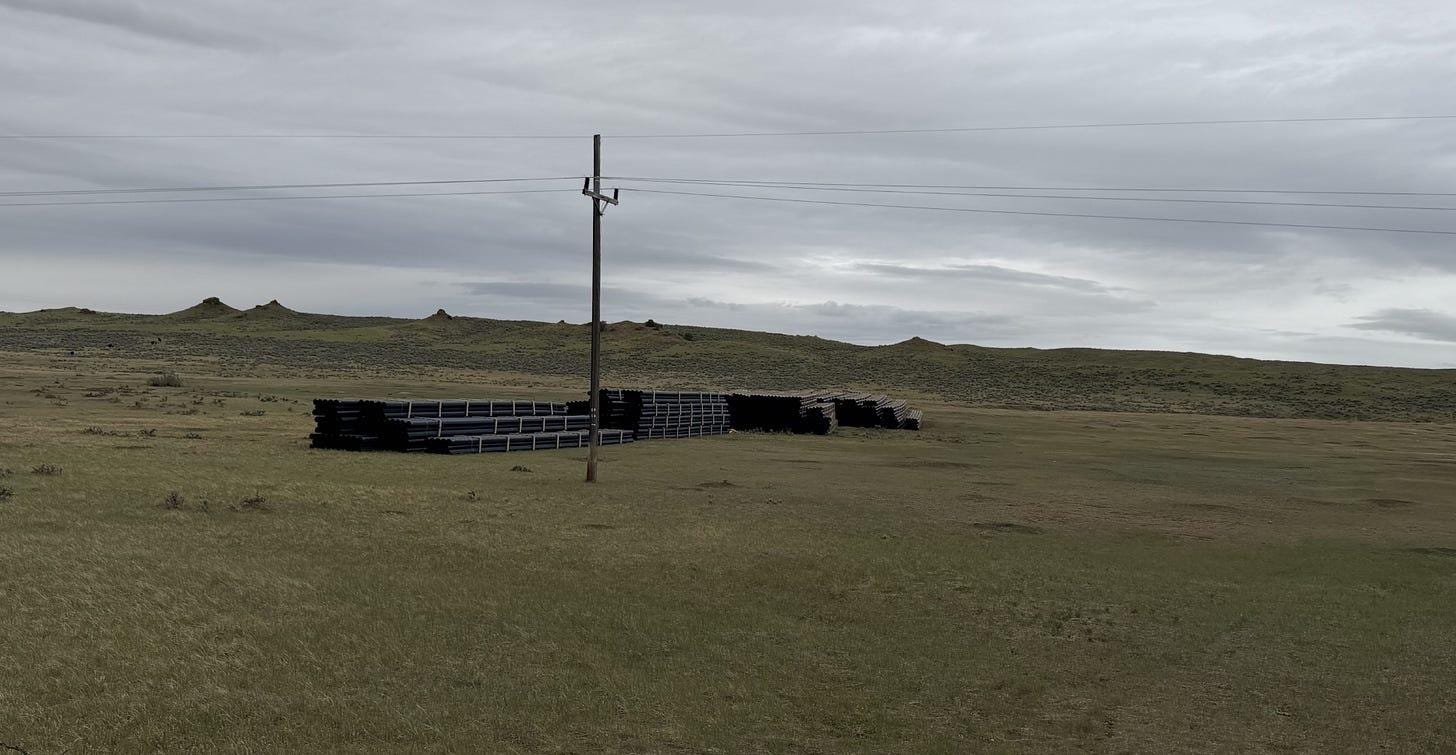
But the utility executives will still get their multi-million dollar golden parachutes from selling us out to Black Hills, with plans for data centers everywhere, all at once.
The PSC cannot legally approve an $11.4 billion transaction while ignoring a multi-gigawatt liability that the utilities are actively engineering for shareholder profits. The regulatory compact stands in place of the competition these monopolies never face. The Commission is the body that enforces that regulatory compact and protects us, the captive ratepayers.
The utilities must produce the Quantica development agreement so the Commission can assess the real impact of the Black Hills acquisition. It was requested in discovery. It was withheld. The Commission must demand it and make findings on what it shows before acting on this transaction.
Shine a light on what is going down in Broadview.
Capital might not be finite for Wall Street pirates. But it is finite for the people of Montana.
It is time for the PSC to enforce the regulatory compact, investigate the true costs of this data center pipeline, and reject the Black Hills acquisition of NorthWestern.
Things you can do:
Comment to the PSC before the Black Hills sale decision closes. The Commissioners are elected by us. Public comments carry weight.
Call your legislators. Ask them to demand a full accounting of the Quantica data center pipeline before the Black Hills transaction is finalized.
Share this post. The more Montanans who know what’s happening in Broadview, the harder it becomes for these utilities to operate in the shadows.
I was a Broadview Pirate. I wore that jersey with pride. I know what our small towns are made of. I know what we stand to lose.
And I know that together, we can hold the line.

All together.
Data center development is outpacing governmental regulation/law. Montana, like many other states MUST take the bull by the horns and demand enforceable regulations that hold these developments to account.
"Data Centers" everywhere all at once. This is looking like a bubble, and when a bubble pops, a LOT of people are left holding the bag. What is happening in the stock market this week - a selloff in semiconductor stocks is related to the very high cost of AI "tokens" that has cut way into the demand for AI implementation. It looks to me like the data center frenzy will be brought up short, half-built and idle server farms all over the country. Utility providers who borrow and spend huge amounts upgrading their infrastructure may be left with excess capacity for which there is no demand.
Regulated utilities must NOT be allowed to pass on the costs of their failed projects, and the time to make this a provision of law is now, before the shakeout.